
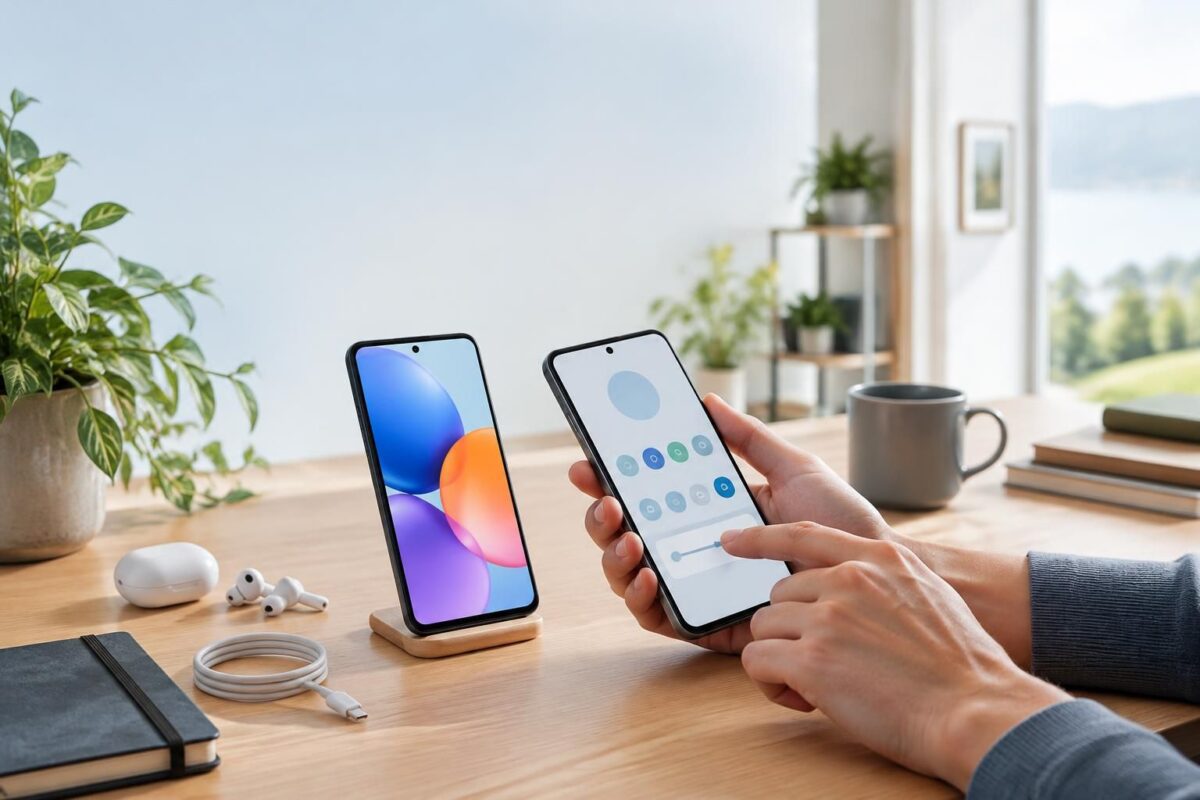
Android tutorials: what to choose without paying for a high-end model?
Hi, it’s Gérald.
To avoid flagship prices, look for a well-supported mid-range phone with a decent screen, good battery life, and enough storage.
An affordable Android smartphone can meet everyday needs without sacrificing essential features. The right choice depends mostly on how you use it, not on the number of camera sensors or advertising promises.
What to do right away
- Set your budget before comparing models.
- Check how long the manufacturer promises to provide Android updates.
- Choose at least 128 GB of storage if you keep lots of photos and apps.
- Compare battery life and charging speed, not just battery capacity.
- Identify the features you actually use: NFC, dual SIM, night photography, or a smooth display.
To look beyond simple rankings, check out these Android reviews that go beyond the usual top lists and these tips for evaluating an app before installing it. These two habits help you choose a device that suits you and make better use of its Android features.
Budget smartphone or mid-range phone: which should you choose?
A cheap Android phone is enough for calls, browsing, messaging, and videos. A mid-range phone, however, often offers a more enjoyable screen, more consistent photos, and more headroom for demanding apps.
Imagine Lina, who uses her phone for maps, social media, and a few travel photos. An entry-level device might do the job, but a better-balanced budget smartphone will save her from paying for performance or features she won’t use.
| User profile | What to prioritize | What to check |
|---|---|---|
| Basic use | Cheap Android phone, reliable battery | Storage and updates |
| Varied everyday use | Well-balanced mid-range phone | Screen, battery life, and camera |
| Frequent gaming and video | More powerful processor and screen | Heat and storage capacity |
Prices vary depending on sales and brands. As a guide, mid-range phones often cost around €200 to €400, while premium models frequently exceed that range: compare the actual price when you buy.
Android buying tips for finding the best value for money
The best value for money doesn’t mean choosing the cheapest phone. It means paying for the features that matter for how you use it and not confusing an impressive spec sheet with an enjoyable experience.
A flagship alternative should be judged over several years
First, look at software support: a device that receives updates for longer is easier to use and keep secure. Also check the availability of after-sales service and the cost of common repairs, such as replacing the screen.
The camera deserves a hands-on test. A high megapixel count doesn’t guarantee better photos; instead, look at photos taken in low light and check video stability. For many buyers, a good main camera is better than a set of secondary cameras that rarely get used.
A three-step process for comparing models
- Write down your priorities. Choose no more than three criteria, such as battery life, camera quality, and updates.
- Compare two or three devices. In a smartphone comparison, check the same features for each model and note the trade-offs you’ll have to accept.
- Try before you decide. If possible, hold the device, check how comfortable the screen is to use, and factor in the price of a case or charger if they aren’t included.
Android tutorials can then help you set up backups, privacy, or notifications. A well-chosen and properly configured model is often more satisfying than a premium device bought solely for its prestige.
Useful questions to ask before buying an affordable Android smartphone
How much should I budget for an affordable Android smartphone?
Prices vary depending on the brand and sales. Compare entry-level and mid-range models based on your needs, taking storage, software support, and any accessories into account.
Is a cheap Android phone suitable for taking photos?
Yes, for everyday photos. However, check results in low light and video quality: the listed specifications alone aren’t enough to judge the camera.
How much storage should I choose?
128 GB is a useful benchmark for many users. If you keep lots of videos or games, consider more storage or check whether the phone supports a memory card.
How can I spot a good alternative to a flagship phone?
Compare battery life, screen quality, useful performance, and how long updates are provided. A phone that balances these criteria can offer excellent value for money without unnecessary premium features.
Thanks for reading! If this topic resonates with you, share your experience in the comments. — Gérald