Tutorials: how to quickly choose a watch without regrets
Hi, it’s Gérald.
To choose a watch you won’t regret buying, first decide how you’ll use it and set your budget, then check the comfort, movement and features that are actually useful.
A watch can accompany you through your days for years, provided it suits your routine and your tastes. A few simple checks are all it takes to avoid a purchase driven by appearance or a promotion.
Things to do right away
- Define your primary use: work, sports, going out or health tracking.
- Set your watch budget before comparing models.
- Choose a type of movement: quartz, mechanical or connected.
- Try on the case size and make sure the watch stays comfortable on your wrist.
- Compare the strap materials and the features that are useful in your everyday life.
To narrow down your choices, start with this buying guide to help you decide with confidence, then compare the criteria for a connected watch suited to your lifestyle.
Classic or connected watch: the right choice depends on how you’ll use it
A classic watch prioritizes simplicity, battery life and style. Quartz is a good fit if you want accurate timekeeping without frequent maintenance, while a mechanical movement appeals for its traditional operation but requires more attention.
A connected watch offers notifications, activity data and sometimes health tracking. However, depending on the model and the features enabled, it may need recharging every few days. The best choice is the one whose features you’ll actually use.
| Criterion | Classic watch | Connected watch |
|---|---|---|
| Primary use | Time, style, simplicity | Notifications, activity, digital features |
| Battery life | Often long, especially with quartz | Regular recharging, depending on use |
| What to check | Movement, strap, case | Compatibility, battery life, useful features |
For example: Lina often works without her phone close at hand and runs three times a week. A connected watch could suit her if she prioritizes alerts and fitness tracking; if she mainly wants an elegant, simple accessory, a classic watch would be a better fit.
Criteria that help you avoid an impulse purchase
Comfort, case size and clothing style
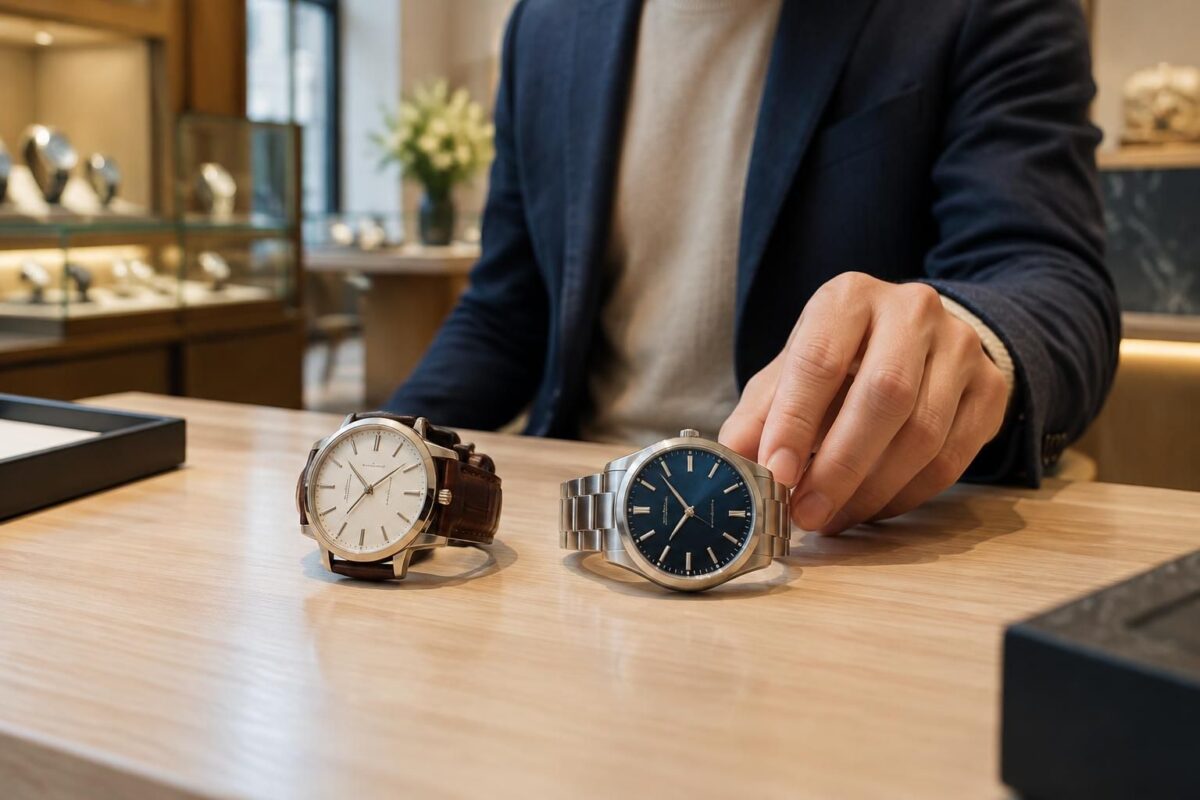
The case should be easy to read without extending far beyond the edges of your wrist. Try the watch on if possible: a model that looks appealing in a photo might feel heavy or too bulky after a few hours.
Strap materials matter too. Leather creates a dressier look, metal is more versatile, while silicone is often better suited to sports and warm weather. Think about your usual clothing style rather than an exceptional outfit.
Useful features and the real cost
For a connected watch, check its compatibility with your phone, its stated battery life and the features you need. For a classic watch, find out about its water resistance, battery replacement or movement maintenance.
The purchase price doesn’t tell the whole story: an interchangeable strap, battery or service can add to the cost. A good purchase fits your budget both now and over time.
A 3-step process for choosing a watch
- Write down your priorities. Note your primary use, your budget and no more than three must-have features.
- Narrow down your options. Compare two or three models based on movement type, comfort, case size and materials.
- Make one final check. Try on the watch, check the warranty terms and ask yourself whether you’d wear it at least several times a week.
This method turns quick buying advice into concrete criteria. It also helps you spot a common pitfall: paying extra for features that will go unused.
Frequently asked questions before buying a watch
What type of movement should I choose for my first watch?
Quartz is easy to use and requires little maintenance. A mechanical movement is a good fit if you appreciate its traditional operation and are willing to maintain it more regularly.
How can I tell if the case size is right?
Try on the watch and check that the case does not visually extend beyond your wrist. Comfort and readability matter more than the current trend.
How much should I budget for a watch?
Set an amount you can spend on the purchase without overlooking potential costs for a battery, maintenance, a strap or recharging. Needs and prices vary depending on the type of watch.
Is a connected watch worth it?
Yes, if you plan to use its notifications, sports tools or tracking features. If you only want to tell the time, a classic watch may be simpler and require less recharging.
Thanks for reading! If this topic resonates with you, share your experience in the comments. — Gérald