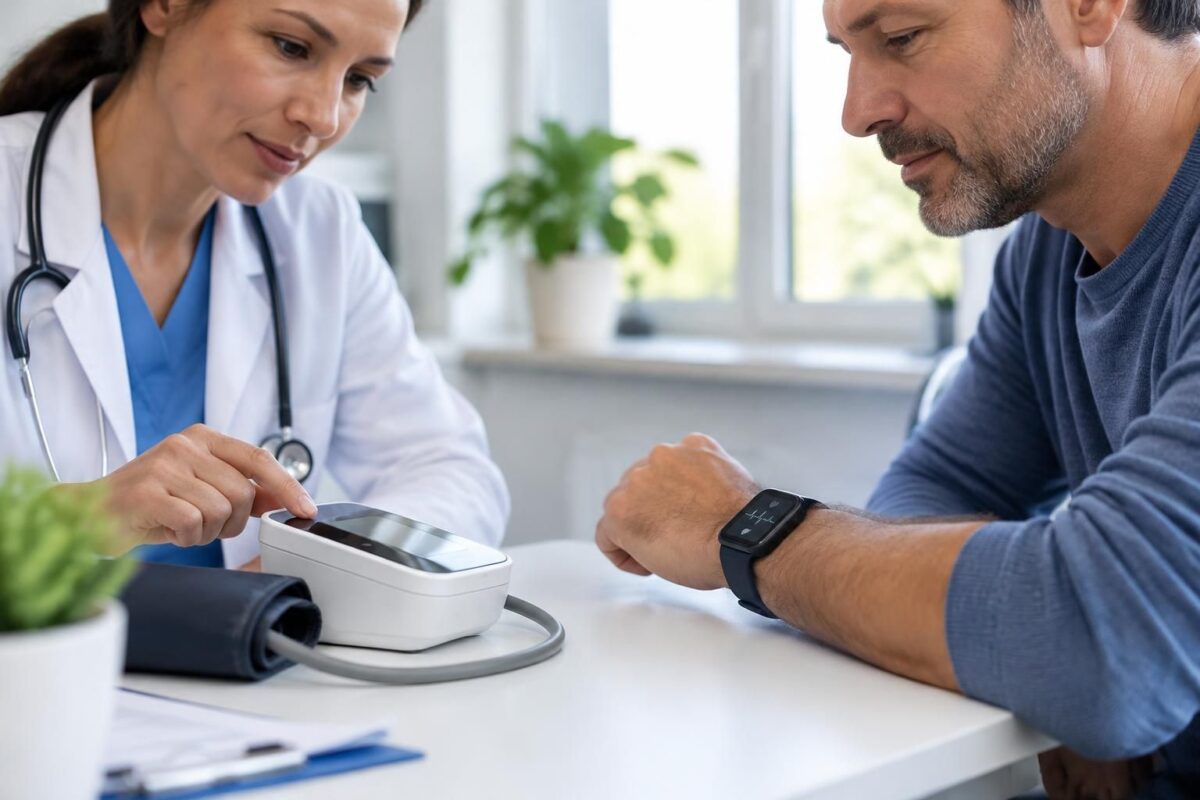
Health apps: Does your watch really measure accurately?
Hi there, it’s Gérald. A smartwatch provides useful insights, but the accuracy of its measurements depends on the sensor, the conditions of use, and the function being tracked. When it comes to your health, it’s better to look at trends than to treat every figure as a diagnosis.
What to do now to better interpret your measurements
- Adjust the band : wear the watch just above your wrist bone, without tightening it to the point of discomfort.
- Compare several days : a trend is more meaningful than a single measurement.
- Keep the limitations in mind : movement, cold, and wrist position can interfere with some biometric sensors.
- Check which function you’re using : an ECG is not a blood pressure measurement.
- Consult a professional if in doubt : share your readings with a professional rather than diagnosing yourself.
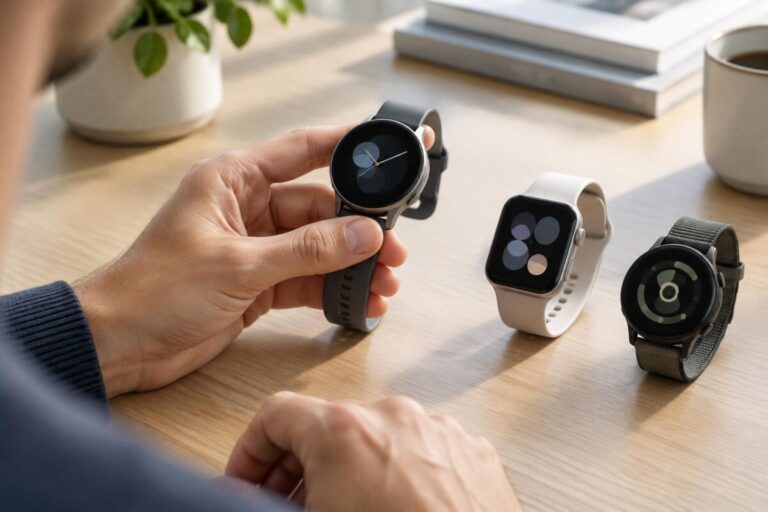
To choose a device that suits your needs, you can also read this guide to choosing a watch based on how you use it and this comparison of connected devices to compare before buying. These pointers help you distinguish genuinely useful features from options that are only appealing on paper.
Smartwatches: what the sensors actually measure
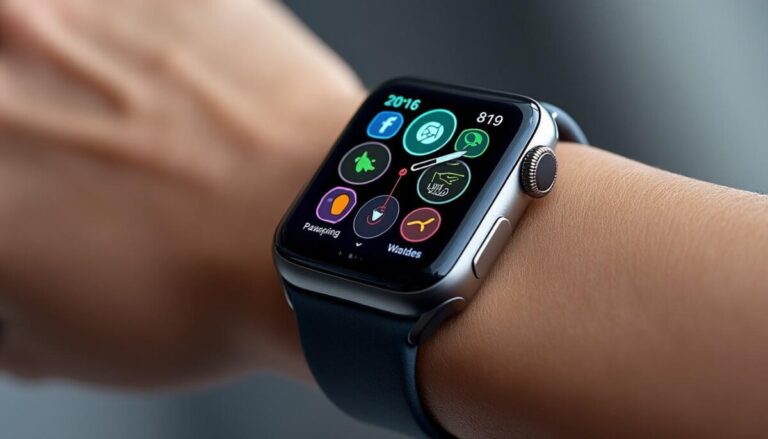
A watch turns physical signals into estimates. Heart rate is generally tracked by an optical sensor: LEDs shine light onto the skin, and a detector analyzes changes related to blood flow.
At rest or during a steady walk, the result is often useful for tracking changes over time. During intense exercise, if your wrist moves a lot or the band is poorly adjusted, the measurement may become less accurate.
Heart rate and ECG: different functions
Optical measurement tracks your pulse, while an ECG on some watches records the heart’s electrical activity for about 30 seconds. It may flag signs consistent with an arrhythmia, such as atrial fibrillation, but it does not replace a full medical examination.
A recurring alert is worth discussing with a professional, especially if it comes with symptoms. To better understand what these devices can detect, also see this overview of smartwatches and hypertension detection.
Sleep, step, and oxygen tracking
Sleep tracking is based mainly on movement and heart rate. It can estimate sleep duration and stages, but may sometimes struggle to distinguish quiet wakefulness from actual sleep: trends over several weeks are more useful than a one-off score.
Step counts can have a margin of error of around 10 to 20%, but can still be used as an indicator of activity. Oxygen saturation, or SpO2, is also only an indication: for a clinical measurement or a respiratory problem, a suitable device and medical advice are preferable.
| Function | Main benefit | Limitation to keep in mind |
|---|---|---|
| Heart rate | Track changes in your pulse at rest or during moderate activity | Less reliable if your wrist moves or the band is poorly positioned |
| Wrist ECG | Record a short tracing and flag certain irregularities | Does not replace a medical ECG or a diagnosis |
| Sleep tracking | Observe habits and trends | Sleep stages are still estimates |
| Steps and activity | Encourage daily movement | The count can vary depending on your movements and the model |
| SpO2 and blood pressure | Provide additional indicators, depending on the device | Reliability depends on the device; a regular watch does not replace a validated medical tool |
Health apps: useful for taking action, not for diagnosing
The first benefit is often practical: seeing how much time you spend sitting can encourage you to walk for a few minutes, and tracking your bedtime can help you spot an irregular routine. Activity reminders then become little prompts rather than goals you have to meet at all costs.
Imagine Alex, who works sitting down and checks his activity tracking at the end of the day. Even if the exact step count isn’t perfect, he notices the days when he moves very little and adds a short walk: it’s the habit that matters, not chasing the ideal number.
The data can also help you describe a symptom during an appointment. But data reliability varies depending on the device and conditions, and only certain functions have been medically validated for a specific use. A good score isn’t enough to rule out a problem, just as an unusual reading doesn’t confirm an illness.
Health tracking with a smartwatch can therefore complement your observations without replacing appropriate examinations. Remember to check your privacy settings too: health information is sensitive, and not all apps store it in the same way.
The numbers trap: when notifications cause worry
Checking your data several times a day can turn a wellness tool into a source of anxiety. An unusual heart rate after exercise, a poor night’s sleep, or a stressful moment doesn’t necessarily have medical significance on its own.
Blood pressure calls for particular caution: most watches estimate it without directly measuring pressure the way a validated blood pressure monitor would. If you need to monitor your blood pressure, ask a professional for advice on which device and method to use.
Also keep in mind that your skin, temperature, watch position, and quality of contact affect the sensors. In digital health, technology can help identify changes; it doesn’t remove the need to interpret them correctly.
A simple three-step method for using your watch
- Set it up correctly. Position it just above your wrist bone and make sure it stays in contact with your skin without restricting circulation.
- Look at trends. Compare data under similar conditions and avoid drawing conclusions from a single night or a single alert.
- Get anything that concerns you checked. Note the context and share the readings with a healthcare professional, especially if an alert recurs or you experience symptoms.
A watch can also provide reassurance through fall detection or an emergency contact feature, depending on the model and settings. However, it remains a support tool: the right use is one that helps you better understand your habits without replacing care.
Frequently asked questions about smartwatch accuracy
Does a smartwatch measure heart rate accurately?
It often provides a useful reference at rest and during moderate activity. Movement, a poorly adjusted band, or intense exercise can reduce accuracy.
Can a wrist ECG diagnose a heart condition?
No. Some functions can record a short tracing and flag possible irregularities, but only a professional can make a diagnosis and decide which tests are needed.
Can you rely on a sleep score?
Use it as an estimate, not as a medical measurement. Trends over several nights are generally more useful than a single score.
Can a watch replace a blood pressure monitor?
Generally, no. To monitor your blood pressure, choose a validated blood pressure monitor and follow the advice of a healthcare professional.
Thanks for reading! I’d be delighted to hear your thoughts in the comments. — Gérald