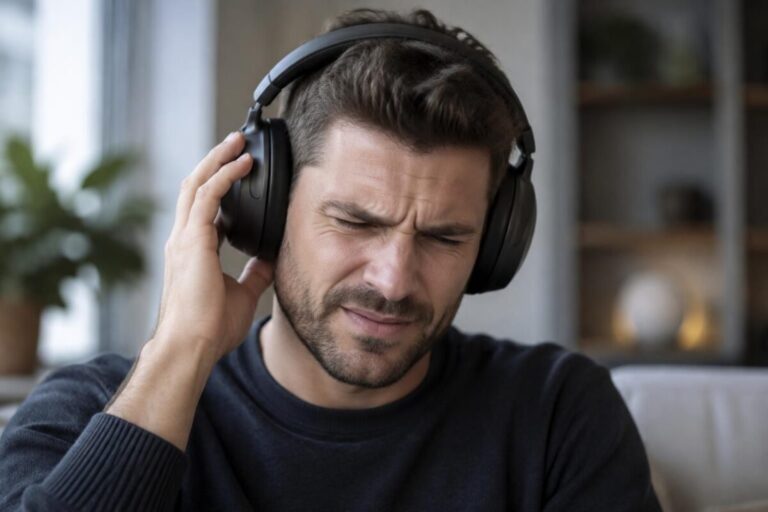

Connected sports devices: which ones isolate you too much in the city?
Hi, I’m Gérald.
In the city, active noise-cancelling earbuds and closed-back headphones isolate you the most; choose an open-back model or transparency mode instead.
A connected device can track your effort without cutting you off from ambient noise. When running or cycling in the city, your audio choice matters just as much as the sports features: city safety also depends on what you can hear around you.
Do this now: stay alert in the city
- Turn off active noise cancellation before heading onto a busy street.
- Turn on transparency mode if your device offers it, then check that you can hear outside sounds clearly.
- Turn down the volume and keep one ear free in busy areas.
- Choose open earbuds or bone-conduction headphones for running.
- Stop your music at intersections and stay especially alert when cycling in the city.
Sports wearables can motivate you and guide your workout, but sound isolation varies widely depending on the model and how it fits. To compare earbuds suited to exercise, also check out our selection of sports earbuds that stay put while running and this guide to sports earbuds to watch.
Which earbuds and headphones isolate you the most in the city?
A common pitfall is choosing equipment based only on how securely it fits or how good it sounds. In practice, wireless in-ear earbuds with active noise cancellation significantly reduce outside sounds; closed-back headphones can also create a substantial barrier, even without active noise cancellation.
Open-back models, by contrast, let more ambient noise through. Transparency mode can help, but its effectiveness varies depending on the device and conditions: it is no substitute for paying attention or listening directly to traffic.
| Type of equipment | Typical level of isolation | Recommended use in the city |
|---|---|---|
| In-ear earbuds with active noise cancellation | High | Avoid wearing them in traffic; turn off noise cancellation or take them out. |
| Closed-back headphones | Medium to high | Not well suited to busy streets, especially at high volume. |
| Earbuds with transparency mode | Adjustable | May be an option if outside sounds remain clearly audible. |
| Open earbuds or bone-conduction headphones | Low | Often better suited to getting around the city, but they don’t guarantee safety. |
Active noise cancellation: effective, but best saved for the right moments
Active noise cancellation uses microphones and electronic processing to reduce certain outside sounds. It’s useful on public transport or at the gym, but out on the street, it can mask useful signals such as a car horn, a bell, or an approaching vehicle.
Sam, who goes for a run after work, can keep his earbuds in on a quiet route through the park. As soon as he reaches streets with intersections, he turns off the audio or takes his earbuds out: a simple step that means he doesn’t have to rely solely on a software mode.
Transparency mode and open models: options worth testing
Transparency mode feeds sounds picked up by the microphones into your ears. It can make listening more compatible with city environments, but the result depends on the model, volume, and ambient noise: test it somewhere quiet before using it outdoors.
Open earbuds and some bone-conduction models don’t block the ear canal. They therefore generally let you hear your surroundings better, which can be useful when running; when cycling in the city, they never exempt you from following local rules or staying fully alert.
Choose your connected gear based on your route
A sports watch or band can measure your pace, distance, and heart rate without isolating you from the sounds of the street. The risk of isolation comes mainly from the audio equipment you use alongside it and how you use that equipment.
Before you buy, think about your usual route. A quiet route through a park doesn’t call for the same choices as a trip involving bike lanes, intersections, and very busy streets.
- Identify exposed sections. Take note of intersections, roadworks, and stretches where bikes and cars pass close to you.
- Choose the right equipment. For an urban route, choose an open model or go without audio; save strong isolation for places where it won’t reduce your alertness.
- Test it in real-world conditions. At low volume, check that you can distinguish important sounds, then turn off the music as soon as the situation gets complicated.
The right choice isn’t necessarily the most sophisticated device: it’s the one that supports your training without taking the place of paying attention. Performance data is useful, but in the city, hearing and observing your surroundings come first.
Frequently asked questions about sports earbuds in the city
Are noise-cancelling earbuds suitable for running in the city?
They can reduce important sounds. It’s better to turn off noise cancellation, choose an open model, or run without audio in busy areas.
Is transparency mode enough to run safely?
No. It can help you hear outside sounds, but its effectiveness varies depending on the model and situation. Stay alert and take out your earbuds if traffic gets busy.
Which earbuds provide the least isolation during exercise?
Open earbuds and some bone-conduction models block the ear less than closed in-ear earbuds. However, they don’t guarantee complete safety.
Can you wear earbuds while cycling in the city?
The rules depend on local regulations. In any case, audio can distract you: check the applicable rules and, when cycling in traffic, choose to ride without earbuds.
Thanks for reading! Feel free to share your observations in the comments. — Gérald