Tests: JBL, Shokz or Sony to avoid regrets
Hello, Gérald here!
For most uses, the Sony WH-1000XM5 is the most well-rounded choice; the JBL Tour One M3 is a better fit if you prioritize battery life and bass, while Shokz is primarily aimed at outdoor sports.
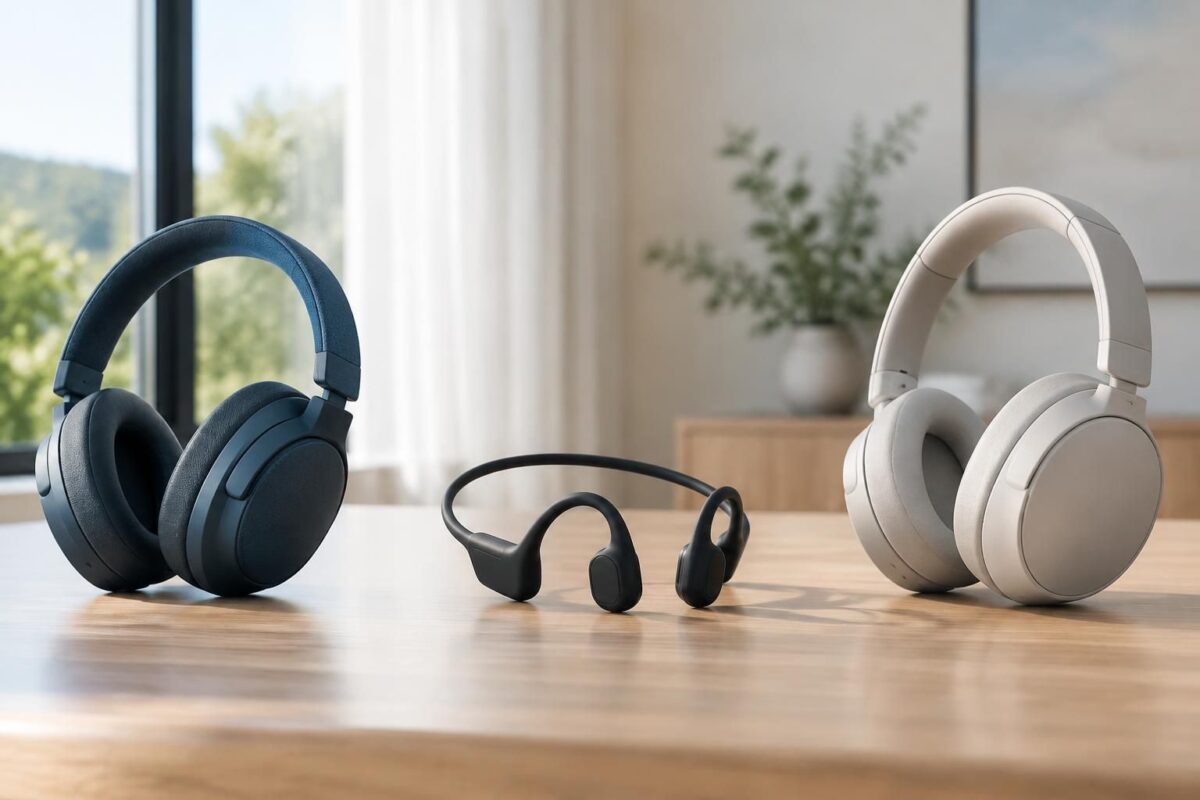
These three models are not quite in the same category: two are noise-cancelling headphones, while the third is an open-ear bone-conduction model. Here are the differences to consider when choosing your headphones without regrets, based on your habits rather than a spec sheet.
Good habits to adopt
- For commuting and the office: prioritize the Sony’s noise cancellation.
- For long days without recharging: compare JBL’s claimed battery life of around 40 hours with the Sony’s approximately 30 hours.
- For running while staying alert to traffic: consider Shokz bone-conduction headphones.
- For choosing your sound profile: Sony focuses on balance, while JBL delivers more prominent bass.
- Before buying: check the comfort, fit, and current price, which can vary with promotions.
A comparison of JBL, Shokz, and Sony headphones should therefore start with how you plan to use them: closed-back headphones for shutting out the world on a train don’t meet the same need as an open-ear model for running. For more information, also check out these tips on choosing headphones without making a mistake and this guide to sports headphones designed for movement.
JBL, Shokz, or Sony: three very different profiles
The Sony WH-1000XM5 and JBL Tour One M3 are closed-back over-ear headphones with active noise cancellation. The Shokz OpenRun Pro 2 has an open-ear design intended for sports: it lets you hear more of your surroundings, but does not aim to create the same kind of sound bubble.
This difference changes the everyday experience. On a train, the Sony or JBL’s isolation helps reduce the steady rumble; on a shared path, the Shokz’s open-ear design may be better suited to hearing what’s going on around you. A head-to-head comparison of the JBL Tour One M3 and Shokz OpenRun Pro 2 clearly illustrates this design difference.
| Criteria | Sony WH-1000XM5 | JBL Tour One M3 | Shokz OpenRun Pro 2 |
|---|---|---|---|
| Design | Closed-back headphones | Closed-back headphones | Open-ear bone-conduction headphones |
| Noise cancellation | Highly effective and adaptive | Effective and adjustable | Not designed to isolate like closed-back headphones |
| Indicative battery life | About 30 hours | About 40 hours | Check based on the version and how you use them |
| Sound signature | Balanced and versatile | Dynamic, with prominent bass | Open-ear listening, prioritizing awareness of your surroundings |
| Best suited for | Commuting, the office, travel | Long battery life and energetic music | Running and outdoor activities |
Noise cancellation: Sony has the edge for commuting
The Sony stands out with active noise cancellation that adapts to your surroundings. For low-pitched, continuous sounds, such as the rumble of a train or ventilation, it generally gives a more consistent sense of isolation than the JBL. The Tour One M3 is still effective and lets you adjust the ANC level, which is useful if maximum noise cancellation makes you feel pressure.
That said, you shouldn’t expect headphones to eliminate every voice or sudden noise. ANC mainly works on certain regular sounds; a nearby conversation will often still be audible. For your daily commute, this comparison of Sony and JBL noise cancellation can help you clarify your priorities.
Headphone sound quality and battery life: balance or energy
Headphone sound quality depends as much on your tastes as on the model. Sony favors a balanced sound that works well with a range of genres and podcasts; JBL puts more emphasis on bass, which can give pop, hip-hop, and electronic music more impact. Both offer settings in their apps to adjust the sound.
As for battery life, the figures being compared indicate around 30 hours for Sony and 40 hours for JBL. These numbers vary depending on settings, particularly whether noise cancellation is used. For someone who listens for several hours every day, that ten-hour difference can mean fewer recharges; it’s one of the clearest arguments in favor of JBL.
Comfort and fit: the right choice depends on how long you listen
The Sony is lightweight and designed to stay comfortable during long listening sessions. The JBL is still comfortable, but you may notice it more after several hours, especially in hot weather. In both cases, the fit depends on the shape of your head and ears: if possible, trying them on for a few minutes is better than buying based solely on Sony or JBL reviews.
Shokz answers a different question: how can you listen to music while keeping your ears uncovered? Its open-ear design can be practical for running, but it doesn’t provide the isolation of closed-back headphones. Shokz reviews should therefore be read with this specific sporting use in mind, rather than as a direct comparison with travel headphones.
A simple choice based on how you’ll use them
Imagine Camille, who takes the train every morning and then works in a shared space: the Sony is the most sensible choice thanks to its isolation, comfort, and versatile sound. If she prefers bass-heavy tracks and wants to recharge less often, the JBL becomes more appealing; for her runs, Shokz is a better fit for staying aware of her surroundings.
- Choose the Sony if you want versatile headphones that stay comfortable over long periods and perform well during commutes.
- Choose the JBL if battery life, bass, and manual ANC adjustment matter more to you than neutral sound.
- Choose Shokz if your priority is outdoor sports and listening without blocking your ears.
Wireless headphone reviews are useful for comparing performance, but they don’t replace choosing the right design. To broaden your headphone comparison, you can also check out this comparison of headphones and portable earbuds.
A three-step method to avoid a disappointing purchase
- Identify your main use: commuting, long listening sessions, or outdoor sports.
- Choose your deciding factor: noise cancellation, battery life, sound signature, or awareness of your surroundings.
- Check the comfort and price: compare available deals and try the model if you get the chance.
In short, Sony is the easiest choice to recommend for commuting and everyday use, JBL has the edge in battery life, and Shokz stands out for running. To choose without regrets, start with the activity you do most: that’s what really sets these three options apart.
Which model should I choose for frequent train travel?
The Sony WH-1000XM5 is the best choice if noise cancellation and comfort during your commute are priorities. The JBL is still a good option, especially if you prefer longer battery life and adjustable ANC.
Does the JBL Tour One M3 last longer than the Sony?
The figures being compared indicate around 40 hours for the JBL, compared with around 30 hours for the Sony. Actual battery life depends on the settings and use of noise cancellation.
Can Shokz be compared with these two headphones?
Not quite: the Shokz OpenRun Pro 2 are open-ear bone-conduction headphones designed, among other things, for sports. They let you hear more of your surroundings and do not isolate you like Sony and JBL headphones.
Which model should I choose for pronounced bass?
The JBL Tour One M3 has a punchier sound signature with prominent bass. The Sony aims for a more balanced sound, which is better suited if you listen to a variety of music genres.
Thanks for reading! Feel free to share your thoughts in the comments. — Gérald