
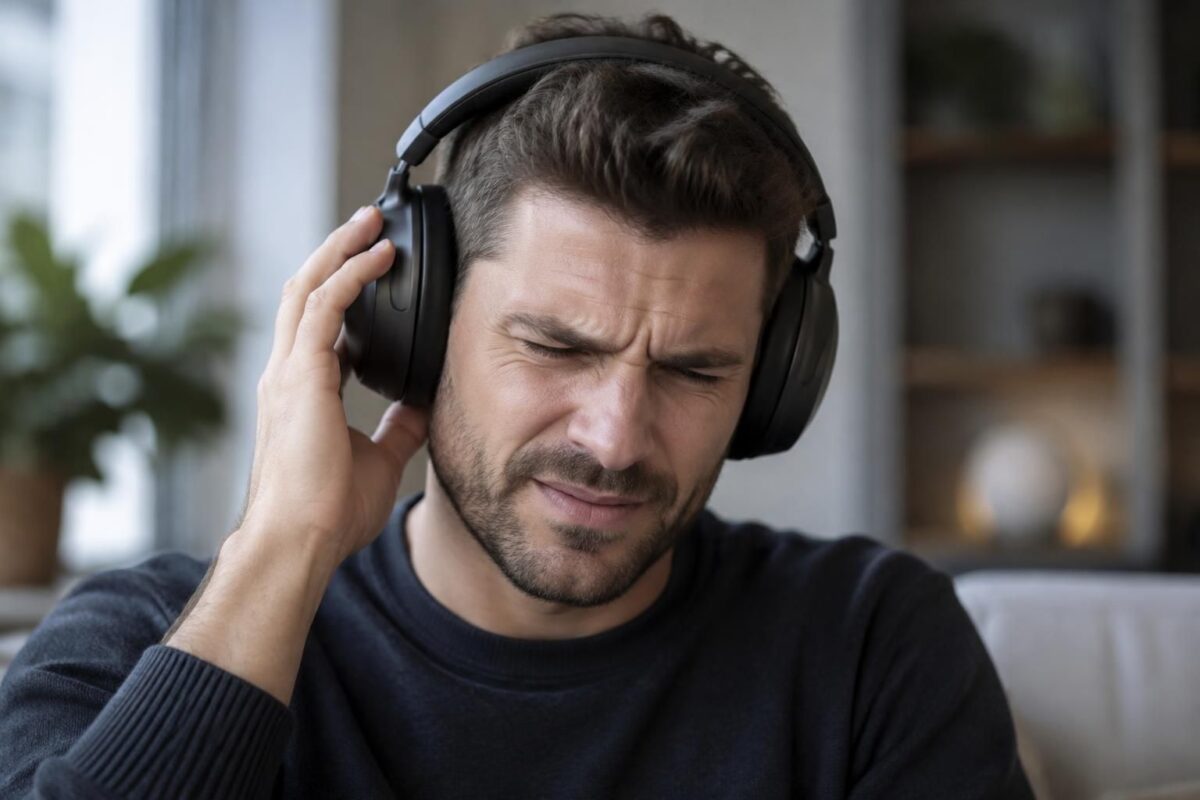
Connected audio devices: beware of overly aggressive retention
Hello, this is Gérald. An earbud should stay in place without squeezing: if you feel persistent pressure, loosen the fit or change the ear tip. An overly tight fit doesn’t necessarily improve stability and can make listening uncomfortable. With connected audio devices, the rule of thumb is simple: the earbud stays in place without pain or a blocked-ear sensation.
What to do right away
- Remove the earbuds if you feel pain, discomfort, or pressure.
- Try a smaller ear tip or a different shape.
- Gently reposition the earbud without pushing it in farther to secure it.
- Lower the volume and take a break if listening becomes tiring.
- Check that both earbuds fit your ears, even if you need different sizes.
A good ergonomic fit should remain comfortable after several minutes, not just feel securely in place the first time you try it. To compare models, you can also check out this guide to the trap of the supposedly perfect fit and these tips on connected earbuds for sports.
Earbud fit: stable doesn’t mean tight
Excessive pressure can come from an ear tip that’s too large, inserting it too deeply, or an earbud shape that doesn’t fit properly. The housing pressing against the outer ear can also cause discomfort while listening, even if the ear tip seems to be positioned correctly.
Imagine Léa, who goes running with earbuds that keep slipping out. She chooses larger ear tips and pushes them in farther: they stay in better, but discomfort sets in after a few minutes. The problem isn’t necessarily a lack of grip; the model or size may simply not suit her ear.
Spotting the signs of an overly tight fit
A pinching sensation, increasing pain, or a mark that remains after you remove the earbuds are signs that you should stop using them. Muffled sound or a feeling of blocked ears can also mean that the earbud is inserted too deeply or that the ear tip isn’t right for you.
Hearing safety also depends on volume and listening time. A tight seal can block out external noise, but that’s no reason to turn up the volume: keep it at a comfortable level and take regular breaks. If pain or reduced hearing persists after you remove the earbuds, seek advice from a healthcare professional.
Ear tips: finding the right balance
| What you feel | Possible cause | What to try |
|---|---|---|
| The earbud presses into the ear canal | Ear tip is too large or inserted too deeply | Try a smaller size and insert it less deeply |
| The earbud moves when you walk | Shape or size isn’t a good fit | Try a different shape or a model with soft wingtips |
| Discomfort on the outer ear | Housing is too bulky or the design isn’t a good fit | Compare it with a more compact model designed for your ear |
| Blocked-ear sensation or listening fatigue | Seal is too tight or volume is too high | Adjust the fit, lower the volume, and take a break |
Silicone and foam ear tips feel different, and sizing can vary from one brand to another. A design that suits the shape of your ear matters more than a promise of maximum grip: the goal is a stable fit without having to push the earbud in.
A simple three-step process
- Start with the standard size. Place the earbud without pushing it in and check that it stays in place when you gently turn your head.
- Compare the ear tips. Try a smaller or larger size, then keep the one that stays in place without pressure or pain.
- Test them gradually. Wear them for a few minutes at low volume. If discomfort returns, remove them and try a different shape or model.
Don’t try to get a perfect seal by tightening the fit: immediate discomfort is reason enough to readjust. For sports, test how well they stay in place while moving before extending your session.
Listening comfort: when should you switch models?
If several ear tip sizes cause pressure, the issue may be the shape of the housing or the type of earbud. Open-style models or earbuds that rest on the ear may suit some people better, even though they block less ambient noise.
Comfortable earbuds shouldn’t cause pain just to stay in place. The right fit is one you forget you’re wearing, without losing control of the volume or awareness of your surroundings.
Frequently asked questions about connected earbud fit
How can I tell if my earbuds are too tight?
Pain, persistent pressure, a blocked-ear sensation, or increasing discomfort mean you should remove them and reconsider the size or positioning.
Does a larger ear tip always improve the fit?
No. An ear tip that’s too large can create excessive pressure. Try several sizes and keep the one that stays in place without squeezing.
Can you wear earbuds if one ear is sensitive?
It’s best to remove the earbuds as soon as discomfort appears. If the pain persists or keeps coming back, seek advice from a healthcare professional.
Do well-fitting earbuds protect your hearing?
A good fit doesn’t replace listening at a moderate volume. Turn the sound down, limit long listening sessions, and take breaks to protect your hearing comfort.
Thanks for reading! Feel free to share your thoughts in the comments. — Gérald