
Sports Trends: The Fake Kings of the 2026 Comparison
Hello, Gérald here.
In 2026, the false kings of comparison rankings are often the most visible products, not necessarily the ones that best meet your needs.
Between sponsored rankings, marketing promises and enticing spec sheets, choosing sports equipment calls for a little perspective. A few practical criteria are all it takes to tell a genuinely good deal from a product that’s just a showpiece.
What to do right away
- Define your primary use: running three times a week calls for different equipment than occasional training.
- Set your budget before comparing and leave some room for useful accessories.
- Check measurable criteria: battery life, weight, comfort, warranty and parts availability.
- Read several detailed reviews, especially ones that describe the product’s limitations.
- Look out for commercial links and distinguish independent tests from promotional content.
For concrete examples, compare the models that are sometimes overrated in comparison rankings with the sports watches that really deliver: reading them side by side helps separate visibility from usefulness.
Sports trends in 2026: why some market leaders disappoint
A ranking can make it seem as though a product is dominant because it appears everywhere. But a high position proves neither its durability nor its suitability for your needs. False market leaders sometimes benefit from a heavy advertising presence, a much-discussed new release or an average rating that hides significant flaws.
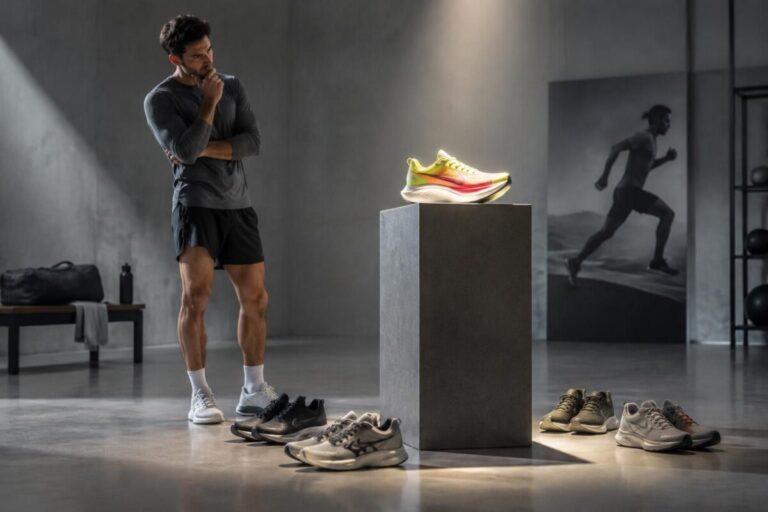
Imagine Léa, who is training for her first 10K. She spots some highly ranked running shoes, then discovers in the reviews that their support doesn’t suit her gait. Her final choice, which gets less attention, gives her greater comfort after several runs: the right product is the one that works for your needs, not the one that wins the visibility contest.
The same principle applies to sports smartwatches, fitness equipment and sportswear. A useful sports comparison explains its criteria, specifies the testing conditions and indicates who each product is suited to. Without these details, ratings and superlatives have more to do with sports marketing than with genuinely helping you choose.
Warning signs worth checking
- Benefits described without measurements, such as “exceptional battery life” with no duration or testing protocol.
- Sports product tests that are too uniformly positive, mentioning almost no drawbacks.
- A recommendation with no user profile: beginners, competitors and occasional users don’t have the same priorities.
- A ranking with no clear methodology, especially if several products seem to have been assessed using different criteria.
These clues don’t automatically discredit an article or a brand. They’re a sign that you should look for evidence before trusting the verdict.
Compare sports equipment based on how you’ll use it
A solid comparison doesn’t put every product on the same scale. It explains the trade-offs: a watch may offer advanced tracking, but be too complicated for someone who just wants to track their outings. Lightweight shoes may suit fast workouts without being the most comfortable choice for long distances.
| Equipment | Criteria to check | Common pitfall |
|---|---|---|
| Running shoes | Comfort, support and intended use | Choosing based only on weight or popularity |
| Sports smartwatches | Real-world battery life and useful features | Paying for metrics you won’t check |
| Fitness equipment | Stability, space requirements and frequency of use | Confusing a large number of features with quality |
| Sportswear | Freedom of movement, material and care | Relying only on photos or technical claims |
Before buying, also check the return policy and warranty. For equipment you wear or use regularly, a clear exchange policy can matter as much as an extra feature.
A 3-step method to avoid false leaders
- Write down your need in one sentence. For example: “I’m looking for a watch to track my runs, with good battery life and no required subscription.” This wording quickly rules out irrelevant options.
- Compare no more than three models. Note the price, essential criteria and drawbacks mentioned in detailed reviews. A simple comparison table makes the trade-offs clear.
- Check the product under conditions similar to your own. Try it in a store if possible, or choose a seller with an easy-to-understand return policy. A real-world trial is the final test.
This approach turns the ranking into a starting point rather than an automatic decision. It’s the best way to spot the sports trends of 2026 that offer real value, without confusing novelty with necessity.
How can you spot an unreliable sports comparison?
Check that the methodology, criteria and testing conditions are explained. Be wary of rankings that mention no drawbacks and don’t specify a user profile.
Are the highest-rated products necessarily the best?
No. A high rating doesn’t guarantee that the product suits your budget, body type or activity. Compare the criteria that matter to you.
What criteria should you compare when choosing running shoes?
Start with comfort, support and the type of runs you have planned. Weight and advertised technologies come next, if they genuinely meet your needs.
How can you choose a sports smartwatch without overspending?
Identify the features you’ll use regularly, then compare battery life, compatibility and any associated fees. Avoid paying for unnecessary options.
Thanks for reading! If this topic resonates with you, share your experience in the comments. — Gérald