Tutorials: Should you choose bone conduction or in-ear?
Hello, Gérald here. Choose bone conduction to keep your ears open, and in-ear headphones for better isolation and a more immersive sound. The right choice mainly depends on your activity, your surroundings, and the feel you’re looking for. Here’s how to decide without getting lost in spec sheets.
Things to do right away
- Define your main use: outdoor exercise, commuting, or listening at home.
- Check the fit: a pair should stay securely in place without causing pain.
- Assess how much isolation you need: in-ear headphones reduce ambient noise more effectively.
- Test listening comfort: pressure on your ears or temples varies between models.
- Set a realistic budget: also compare battery life, sweat resistance, and controls.
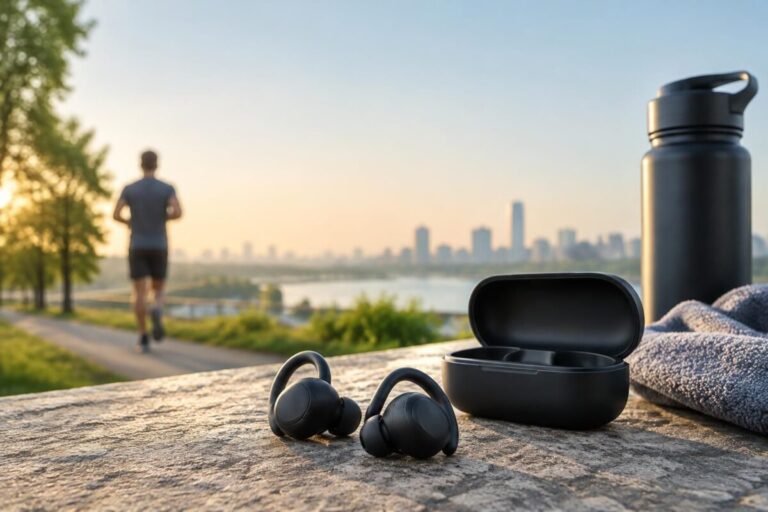
For sports, you can also check out this guide to choosing headphones for running outdoors and this comparison of headphones designed for worry-free workouts. These two articles are useful additions to a headphone comparison based on your habits.
Bone conduction or in-ear headphones: the key differences
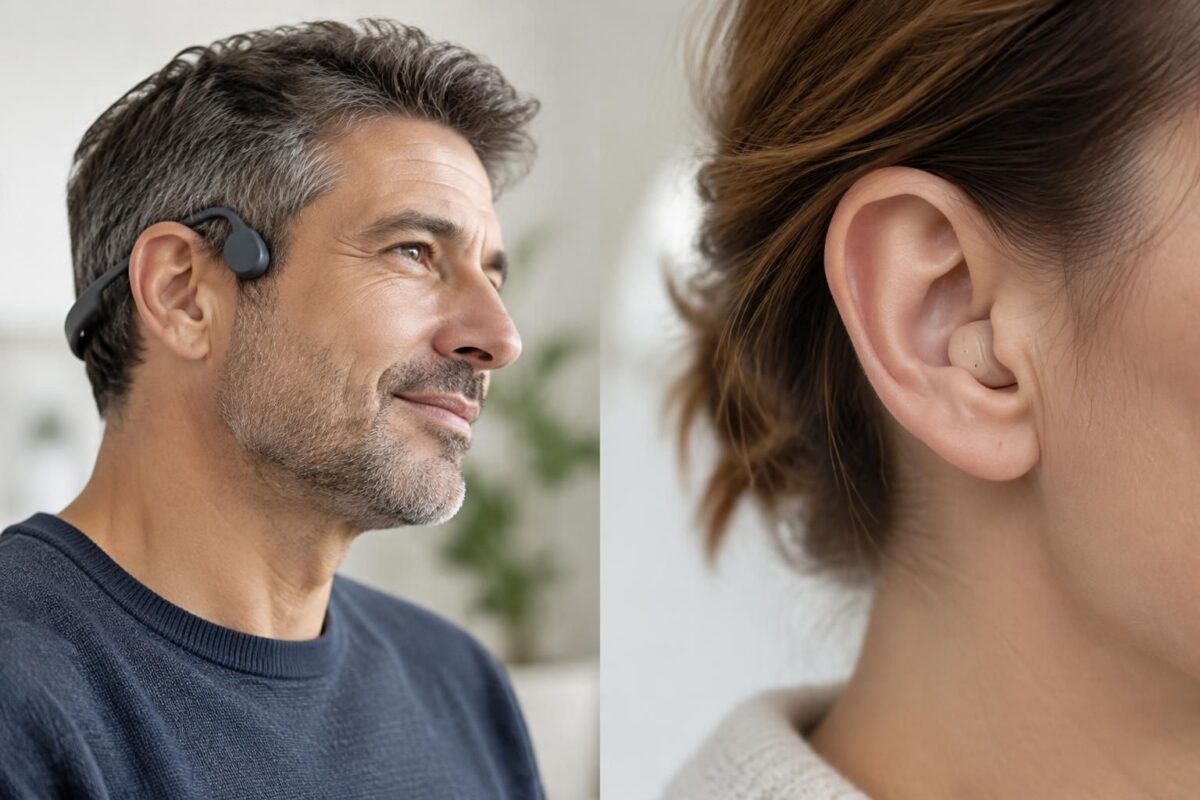
A bone conduction headset transmits vibrations through the bones near your ears. Your ear canals remain open, which can be useful when cycling or running if you want to be more aware of what’s happening around you.
In-ear headphones sit in the ear canal. Depending on their design, they provide more isolation from external noise and may deliver stronger bass. However, some people dislike the feel of the tips or need to try several sizes to get a good fit.
| Criterion | Bone conduction | In-ear headphones |
|---|---|---|
| Ears remain open | Yes | No |
| Noise isolation | Low | Often better, especially with noise cancellation |
| Sound quality | Good, but often with less-deep bass | Varies, with greater potential for an immersive sound |
| Common uses | Running and activities where you need to hear your surroundings | Commuting, work, and focused listening |
| Wearing feel | Pressure around the ears or temples | Eartips in the ears |
Key takeaway: no format comes out on top in every category. Comfort and everyday use often matter more than the claims on the packaging.
For sports: stay aware of your surroundings
Imagine Lina, who runs alongside a busy road. With a bone conduction headset, her ears remain open to ambient sounds, which may help her hear a bell or an approaching vehicle. It’s an interesting option among sports headphones, but it never replaces staying alert.
By contrast, on a treadmill or in a noisy gym, in-ear headphones can make music sound clearer at a moderate volume. In either case, listening too loudly is still risky: keeping your ears open does not provide hearing protection.
For commuting and focused listening: prioritize isolation
On a train, in a shared office, or at home, in-ear headphones can reduce distractions, especially if they have effective noise cancellation. This isolation makes it easier to listen at a reasonable volume, but you should stay alert to announcements and your surroundings when you’re on the move.
Bone conduction can work well for listening to a podcast while remaining aware of nearby sounds. However, in a very noisy place, the sound may seem less precise or require a higher volume. The best compromise therefore depends on how much quiet you need.
How to choose your headphones in three steps
- Start with where you listen. If you run outdoors or want to hear ambient sounds, try bone conduction. For commuting or immersive listening, consider in-ear headphones.
- Test the fit and comfort. Wear the model for a few minutes and move your head. A headset that slips or painful eartips will probably end up at the back of a drawer.
- Compare useful features. Check battery life, sweat resistance, controls, and sound reproduction. A useful audio buying guide weighs these factors against your needs rather than focusing on a single spec sheet.
A common mistake is buying the most isolating model for running alongside a road, or the most open model for listening while commuting. Choosing based on where you’ll use them first reduces the risk of making the wrong choice and helps you get more out of your purchase.
Useful questions to ask before choosing an audio format
Is bone conduction better for running?
It can be useful if you want to keep your ears open and hear more ambient sounds. Stay alert and choose your route carefully: this format does not guarantee safety.
Do in-ear headphones always offer better sound quality?
Not always. Their fit and design have a major effect on the sound. However, they can provide better isolation and stronger bass than many bone conduction models.
Does bone conduction protect your hearing?
No. It does not provide hearing protection. Listening for a long time at a high volume can still be harmful, regardless of the type of headphones.
How can I tell if in-ear headphones are comfortable?
Try several eartip sizes and make sure the headphones stay in place without causing pain or excessive pressure. Comfort can change after wearing them for a few minutes.
Thanks for reading! If this topic resonates with you, share your experience in the comments. — Gérald